
To ensure accurate and reliable measurements from your Corsano CardioWatch 287-2, it’s important to wear the bracelet snugly, but not too tight.
✅ What Does “Snugly” Mean?
A snug fit means the bracelet stays securely in place on your wrist during rest and movement, without sliding or rotating. However, it should not press uncomfortably into your skin or restrict blood flow.
- Too loose? You may get poor signal quality and unreliable data.
- Too tight? It can restrict circulation and reduce wearing comfort.
💡 Tips for the Best Fit
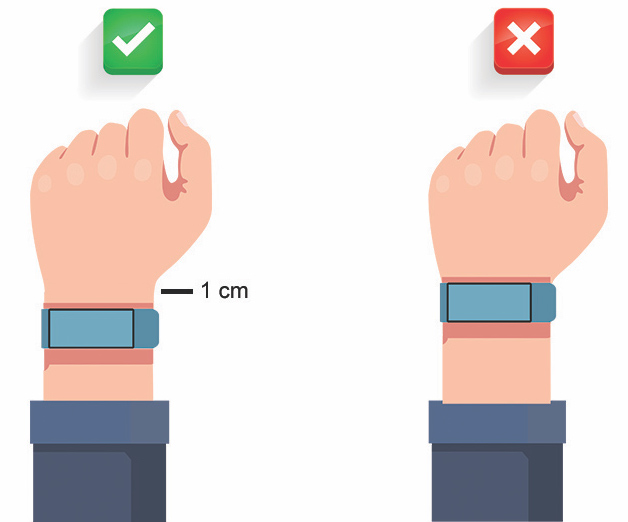
- Position the bracelet about 1–2 cm above your wrist bone, on the flatter part of the forearm.
- Tighten the strap so there is firm contact with the skin, but you can still insert a fingertip underneath.
- Avoid wearing it over tattoos, scars, or very bony areas, as this may affect signal quality.
🛠️ Why Fit Matters
The Corsano bracelet uses optical sensors to measure vital signs, such as SpO₂. A proper fit ensures:
- Consistent contact between the sensor and the skin
- Accurate signal detection for SpO₂, heart rate, and more
- Comfortable long-term wear, essential for continuous monitoring
Wearing it correctly means better data for better care.
If you’re unsure whether your bracelet is fitted properly, you can always redo the Wearing Optimisation in the app.
CardioWatch orientation
First, look for the side of your CardioWatch which has either a pusher (287-1B) or LEDs (287-2B) as shown below.
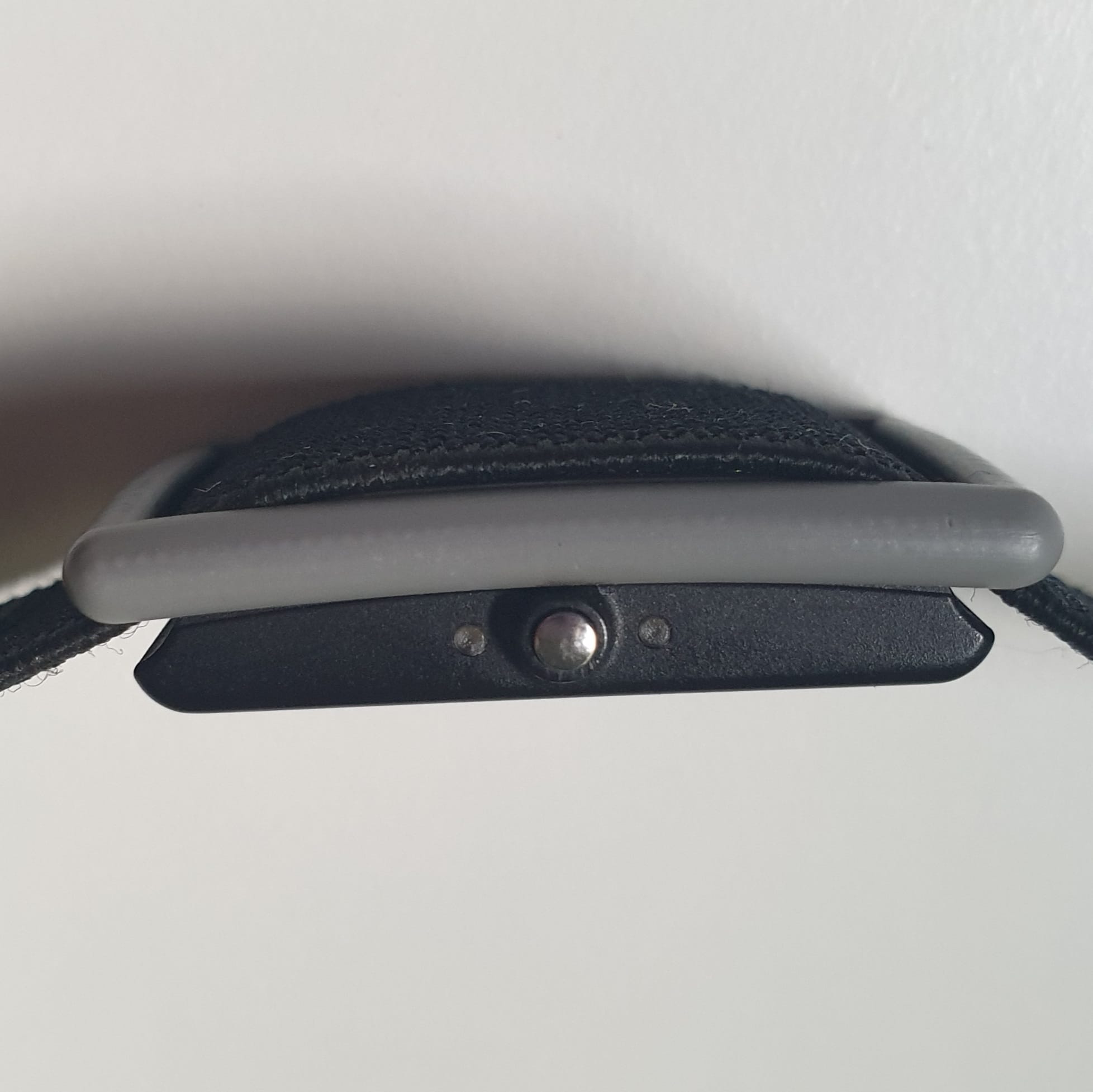
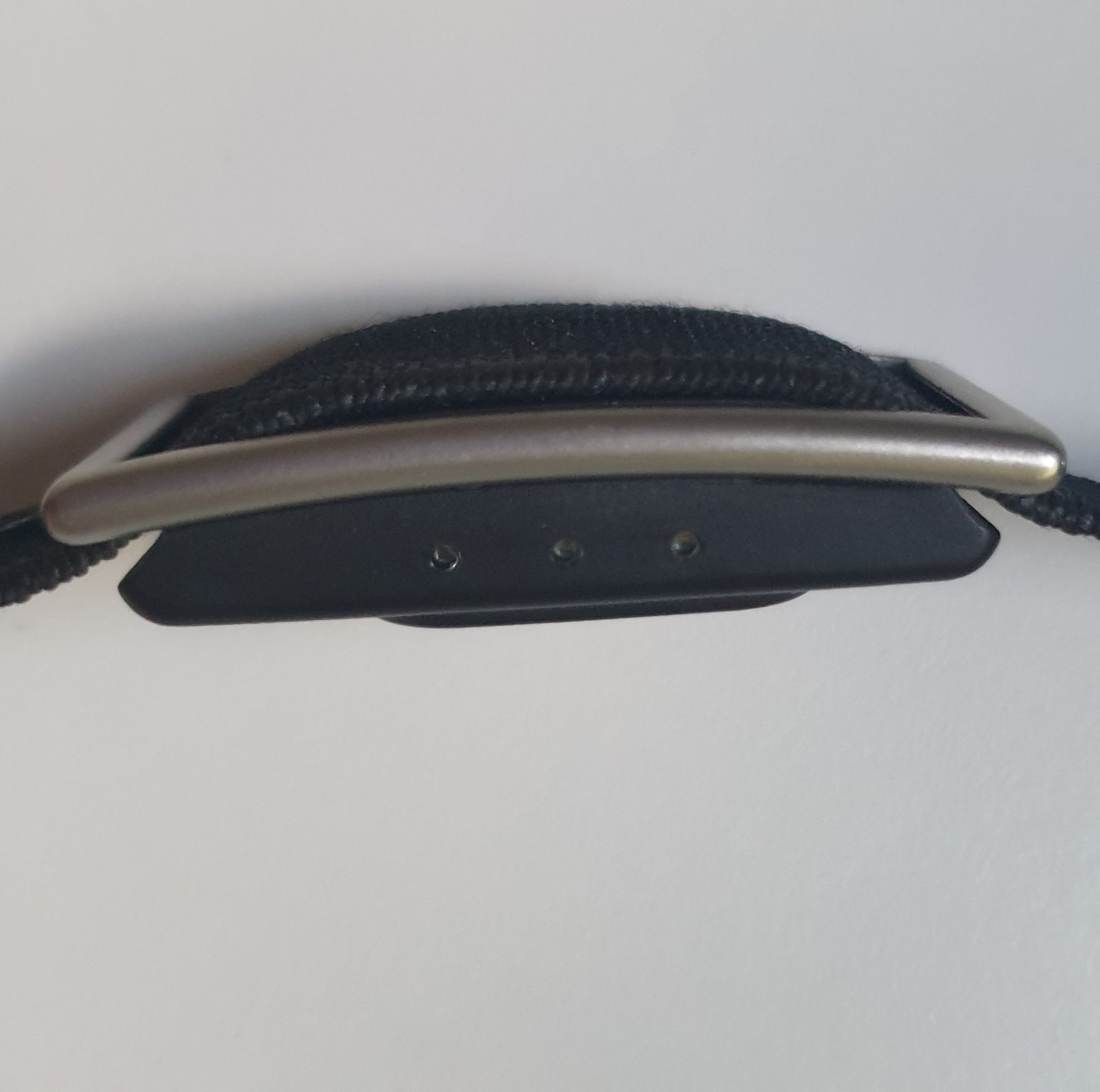
Now, think of your CardioWatch as a regular watch, where the crown has been replaced with a pusher or LEDs. Then, you naturally wears it like this.
Left hand
Pusher or LEDs side towards the hand

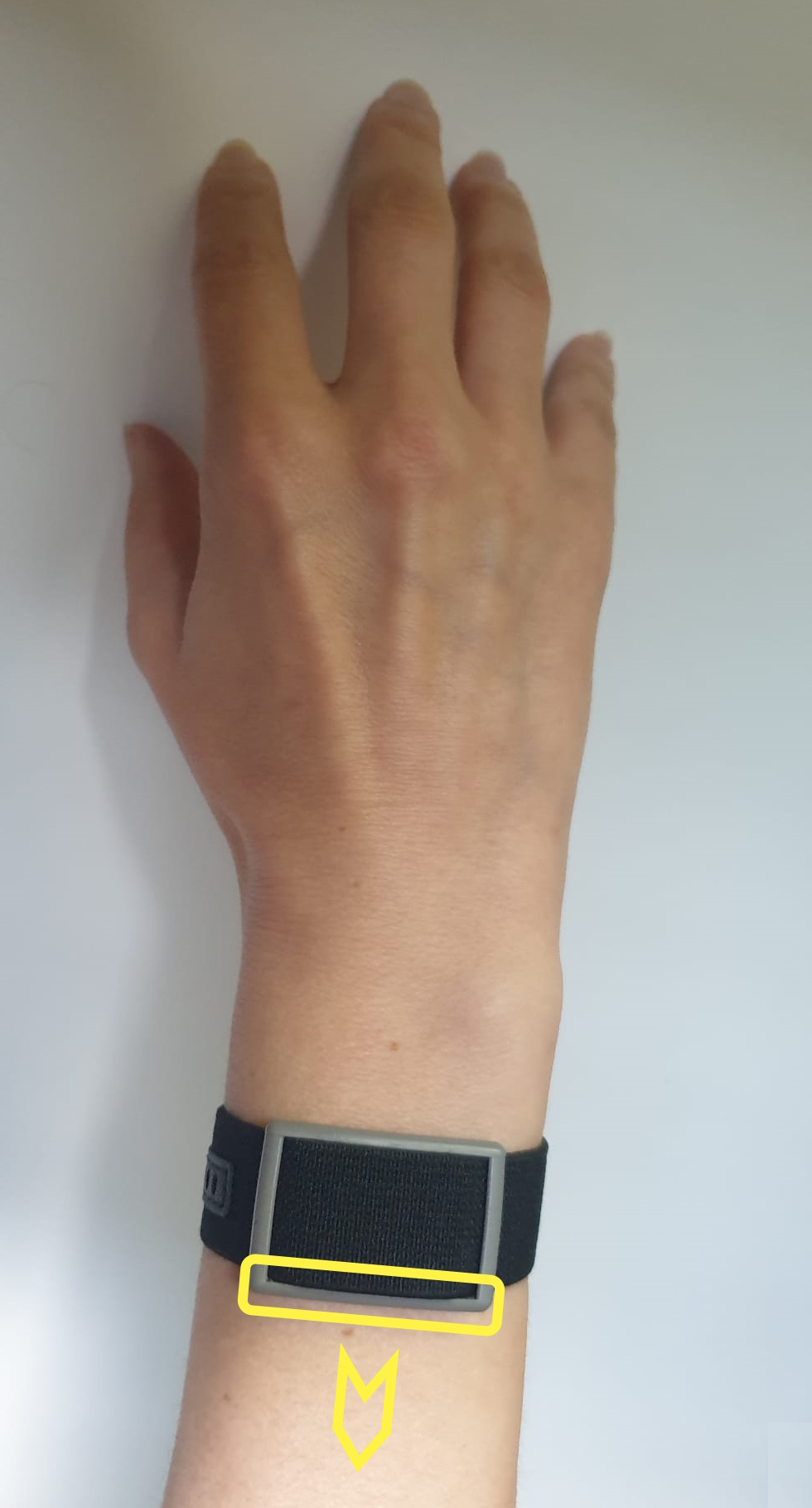
Right hand
Pusher or LEDs side towards the shoulder